 TIS 131 450
Project Assessment Draft Report
Overview
Sydney Ring South is a project identified in AEMO’s Integrated System Plan that is needed to increase access to reliable, affordable renewable energy for our growing communities by addressing an energy bottleneck into South Western Sydney and the Illawarra. It ensures the secure and resilient supply of lower-cost energy that NSW energy consumers need as their demand for electricity grows and coal-fired power stations close. Without this project, a constrained power supply could place pressure on electricity costs and limit future growth across the region.
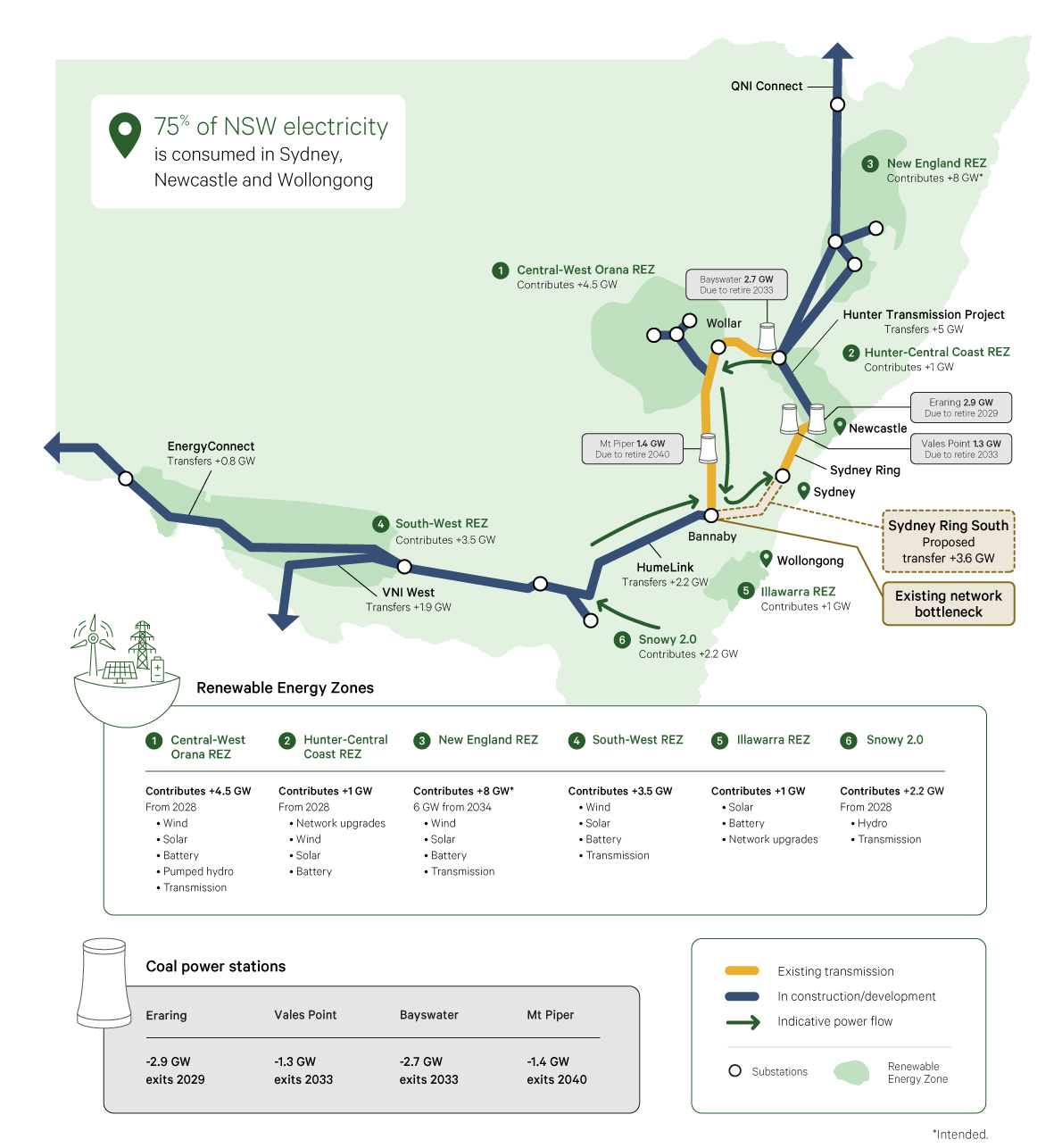
Home to more than 2.5 million people, Western Sydney is among Australia’s fastest‑growing economic regions. As we increasingly depend on cheaper renewable energy that is being generated across the state, Transgrid is investigating options to strengthen the energy system's ability to transfer that renewable energy to Sydney, Newcastle and Wollongong, which accounts for 75 per cent of all electricity consumed in NSW.
AEMO has asked Transgrid to complete a detailed assessment of credible options that strengthen the electricity network and allow more energy to flow from regional NSW into the southwest of Sydney. Transgrid has assessed six options to upgrade infrastructure, including upgrades to the existing network and new substations and transmission lines that could bring more energy into Western Sydney.
At this stage, no routes or designs have been identified. We’re sharing information about options early so residents, businesses and stakeholders can understand why this work is being considered and help shape how it progresses.
We are at the starting point of an ongoing conversation to help secure the long-term energy requirements of an important region. Community and stakeholder feedback will play a critical role in project design and development and we are seeking your views before decisions are made, not after. We encourage you to participate and make a submission to help inform the future of the electricity system for NSW.
What is being looked at
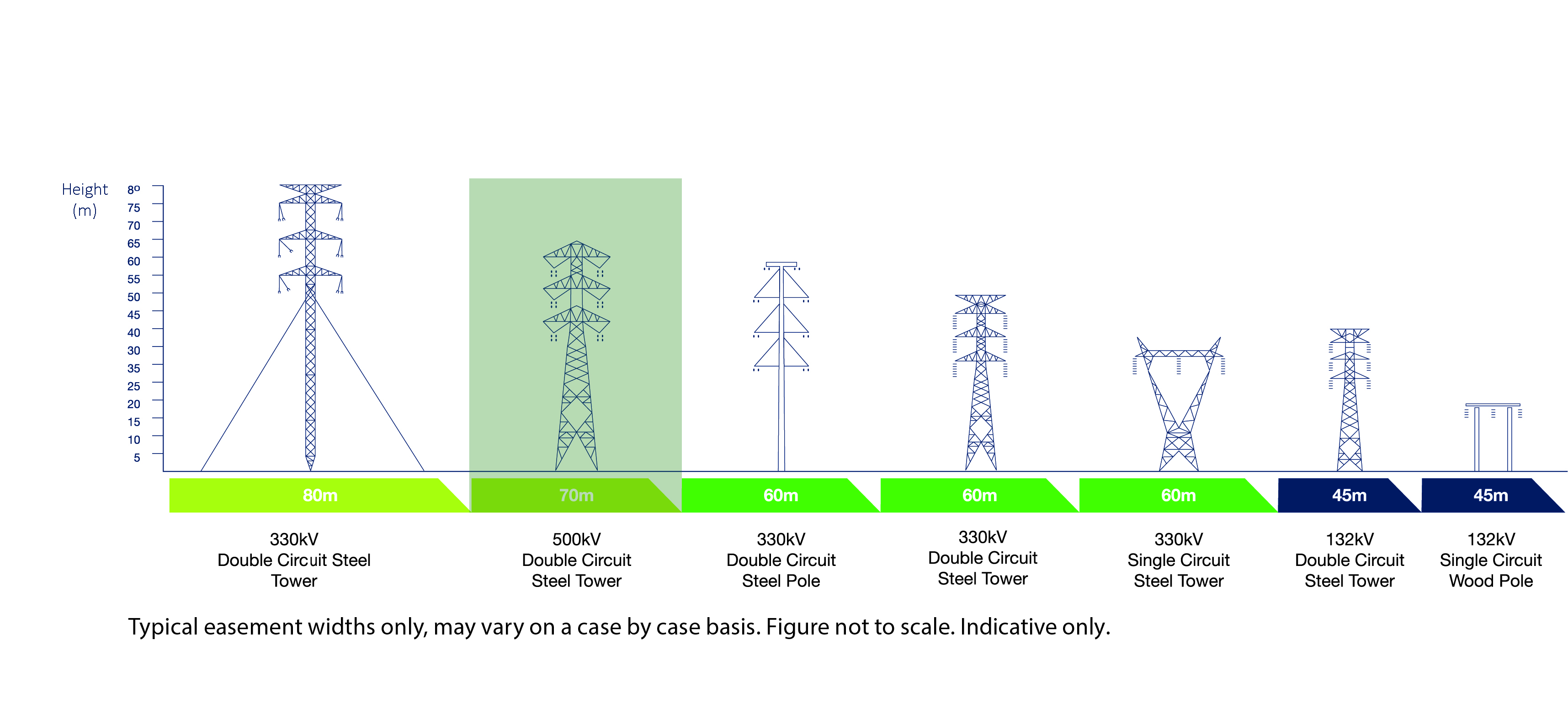
To meet rising electricity demand and support the state’s transition to lower cost renewable energy, Transgrid is investigating options for a second high-capacity transmission pathway, such as a 500 kV transmission line, into Western Sydney.
This would alleviate a bottleneck that will increasingly limit electricity flow into the region. It would also strengthen the wider network, making it more resilient to major weather events, and ensure more affordable renewable energy can reliably reach communities across Greater Sydney, the Hunter and Illawarra.
Sydney Ring South is about planning a long-term power supply solution that safeguards consumers and communities while supporting economic growth in the region. Doing this work early means we can safeguard lower cost options, which is important for all, including future generations.
Sydney Ring South aims to:
-
unlock renewable energy from across regional NSW, the cheapest form of electricity
-
place downward pressure on energy prices by increasing access to lower-cost renewable generation, in line with AEMO’s ISP
-
maintain reliable power for NSW energy consumers as the system transitions from coal to renewables
-
strengthen productivity, innovation and long-term economic growth in Western Sydney, supporting Bradfield and Western Sydney International Airport.
Where are we now?
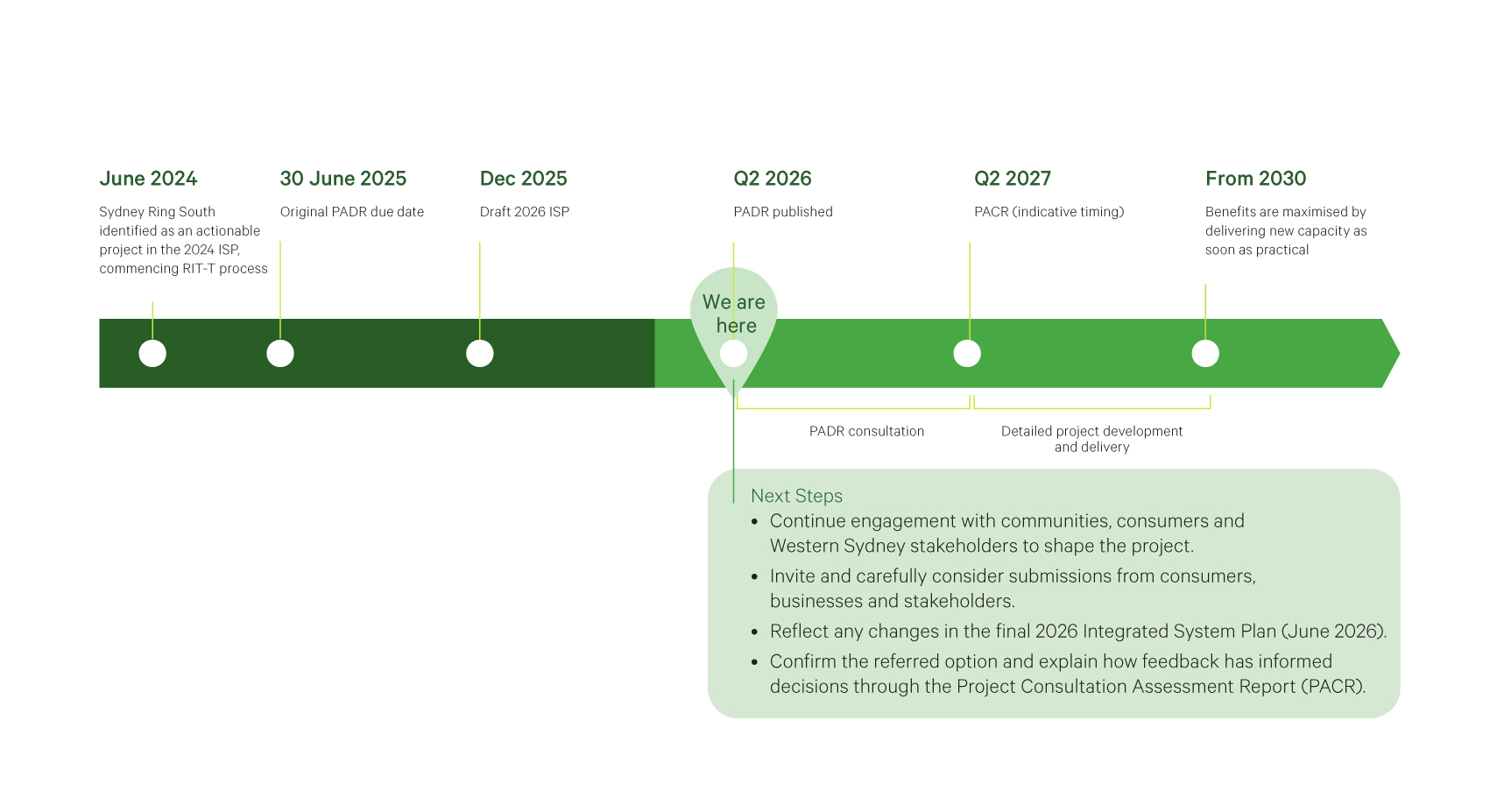
Sydney Ring South is in the early planning stages. We are investigating potential options as part of the Project Assessment Draft Report (PADR), which is the first step of the Regulatory Investment Test for Transmission (RIT-T).
Together with community and stakeholder input, this process aims to evaluate all credible options to determine the right solution, at the right time, and at the lowest cost for consumers.
The PADR is available to download on this page. We are undertaking a detailed stakeholder consultation process on the outcomes of the PADR and we encourage stakeholders to put forward their views.
The next stage following the PADR is the Project Assessment Conclusions Report (PACR), which provides further assessment into the proposed preferred option with a consultation and submission period. This is the final step in the RIT-T.
PADR Supporting Documents
Document
Document
Document
Document
Document
Document
Consultation timeline
-
PADR - Completed
13-week consultation period was open for submissions between 29 May and 28 August 2026.
-
PACR - Proposed
Proposed preferred option is shared publicly around mid-2027.
How we are engaging
Throughout the planning process, we’ll provide clear, timely information and multiple opportunities for people to learn about the project and share their views.
We will be transparent about what is known, what is still being considered and how stakeholder input informs decisions. Our focus is on early listening to understand community values, aspirations and potential impacts.
Transgrid will invite feedback from communities, consumers, government, industry and other stakeholders.
Further details about who we will be engaging with and how, can be found in our Stakeholder Engagement Plan.
More information
If you have any questions about this project, please email srs@transgrid.com.au or phone 1800 222 537.
Useful documents:
A strong transmission network
Sydney, Newcastle and Wollongong together form one of Australia’s most important economic regions. More than six million people live across this corridor, and it accounts for around 75% of New South Wales electricity demand.
For generations, this region has been powered by coal. But that is changing quickly. Over the next decade, NSW’s coal-fired power stations will progressively retire and exit the market, marking a major shift in how electricity is produced.
Renewable energy - now the lowest-cost source of electricity in Australia - will increasingly power homes, businesses and industry. Much of this new generation will come from Renewable Energy Zones in regional NSW and from interstate.
Even with impressive rooftop solar and growing home battery uptake, households and businesses still rely heavily on the grid during evenings, cloudy weather and peak usage times. Expanding the network will help address these challenges and ensure energy supply keeps pace with growth.
Frequently Asked Questions (FAQs)
What is Sydney Ring South?
The Australian Energy Market Operator (AEMO) has identified the Sydney Ring South Project in its Integrated System Plan (ISP) as a critical and actionable investment to maintain the reliability and affordability of the NSW electricity system.
The ISP highlights that there are emerging constraints on electricity supply into Sydney from the south which, if not addressed, are expected to place upward pressure on electricity bills and limit economic growth.
The need for Sydney Ring South is identified in the Draft Australian Energy Market Operator’s (AEMO) 2026 Integrated System Plan.
What is Transgrid? What is their role in the project?
Transgrid operates and manages the high voltage electricity transmission network in NSW and the ACT, connecting generators, distributors, and major end users. Our network includes more than 11,500 km of high-voltage transmission lines and 131 substations and switching stations.
AEMO has asked Transgrid to complete a detailed assessment of options to strengthen the electricity network and increase capacity as part of Sydney Ring South.This includes investigating a potential second high-capacity transmission pathway into South Western Sydney.
What is AEMO?
AEMO manages electricity and gas markets across Australia, helping to ensure Australians have access to affordable, secure and reliable energy. AEMO was established by the Council of Australian Governments (COAG) in 2009 to manage the National Electricity Market (NEM) in the eastern and southeastern states and Australian gas markets. They work with network operators, like Transgrid, so Australians have access to safe and reliable power. More information here.
Why are we talking to you now?
We are at a very early planning stage for Sydney Ring South. The final engineering solution will not be decided for some time. We want to start a long-term conversation with all stakeholders to attain their input early - before key decisions are made.
We are also required, under rules set out by the Australian Energy Regulator (AER), to consult with stakeholders during the development of projects like Sydney Ring South and consider feedback in deciding the best solution to meet the need for Sydney Ring South.
What is driving the need for Sydney Ring South?
- The Sydney, Newcastle, and Wollongong region currently accounts for 75% of energy demand in NSW – a share that continues to grow as homes and businesses electrify. By 2041, the region’s population is projected to reach 8.1 million people, all of whom will rely on electricity to power their lives.
- Coal is closing. For many years, most of NSW’s electricity has come from large coal-fired power stations in the Hunter Valley and Central Coast. These plants are close to Sydney and were easy to connect to the electricity network.As coal-fired power stations retire, NSW will depend increasingly on renewable energy sourced from regional NSW and interstate. The existing network into Sydney from the south relies on just three single-circuit 330 kV transmission lines – a significant bottleneck that will limit how much lower-cost renewable energy can reach Sydney, Newcastle and Wollongong.
- We need to increase capacity in this area of the network to power the future.
In short, Sydney Ring South is being driven by:
- growing population and demand, particularly in Western Sydney
- closure of coal-fired power stations, which currently supply the region
- the shift to renewable energy located across regional NSW and interstate and
- a worsening bottleneck which limits how much lower-cost renewable energy can reach Sydney, Newcastle and Wollongong.
What are the benefits of Sydney Ring South Project?
Sydney Ring South is expected to deliver broad benefits to NSW electricity consumers and the economy by:
- supporting retiring coal generation to be replaced with a lower-cost mix of generation and storage, in line with AEMO’s ISP
- reducing network congestion on key transmission corridors
- placing downward pressure on wholesale electricity prices and consumer bills
- supporting investment confidence and continued economic and population growth across Western Sydney, including Bradfield and the Western Sydney International Airport and
- enhancing the energy system’s resilience, operability and security throughout the energy transition.
How are different engineering options assessed?
Transgrid must test different credible engineering options against a set of economic criteria set by the AER. The process is called a Regulatory Investment Test for Transmission (RIT-T). The RIT-T is a cost/benefit analysis designed to identify the credible option that maximises the net economic benefit fora project that meets the long-term needs of energy consumers.
What is involved in the RIT-T process?
The RIT-T processis ultimately intended to protect consumers from paying more than is necessary for their electricity in the long-term, while still benefitting from a safe and reliable electricity supply.The process is a staged approach where by the cost/benefit of different options are assessed and ranked. At different stages of the process, stakeholders are invited to make submissions to outline their views, or to support a particular option(s). Submissions are a vital part of the project development process.
More information on the on the RIT-T can be found on the AER website.
What is the role of the Australian Energy Regulator?
The Transgrid network is a natural monopoly with no direct competitors. The AER regulates electricity networks like Transgrid by setting the maximum amount of revenue they can earn from electricity users. It also ensures network operators like Transgrid operate within strict guidelines called the National Electricity Rules when assessing and planning new transmission projects to make sure prudent and efficient decisions are made for the benefit of electricity consumers.
For more information on the relationship between the AER and Transgrid in planning and operating the network please see this video.
What is a Project Assessment Draft Report (PADR)?
For Sydney Ring South, the PADR is the first major milestone in the regulatory planning process. The PADR assesses different engineering options and ranks them according to their net present value of overall economic benefits to electricity consumers and producers. Stakeholders are invited to make submissions to outline their views, or to support a particular option(s) outlined in the PADR.
What is a Project Assessment Conclusions Report (PACR)?
Following the PADR publication and submissions phase, Transgrid will undertake further modelling and analysis and factor submissions into decision-making. We will then publish a PACR, which will present the recommended solution to deliver the highest net economic benefit and intended course of action to address the energy need.
Where are we in the planning process?
What options have been assessed in the PADR?
The PADR has assessed six different options for strengthening the electricity network. Options range from smaller upgrades to the existing network, through to building a new high-capacity transmission line between Bannaby in the Southern Tablelands and South Western Sydney.
We also considered two non-network alternatives involving large-scale battery storage projects proposed by private companies. However, these were not found to provide a credible alternative to increase the energy system’s capacity to support Sydney, Newcastle and Wollongong into the future.
A table showing the outcomes of the six options assessed can be found on page 9 of the PADR on our SRS webpage on the Transgrid website.
What is the current preferred solution outlined in the PADR?
The PADR identifies a new 500 kV line, between Bannaby in the Southern Tablelands and South Western Sydney, as the preferred option. This is because it can best support NSW energy consumers’ long-term needs for secure, reliable and affordable energy at the lowest, most efficient cost. Importantly, it delivers the greatest benefit to NSW consumers and the broader economy. This option also performs best in scenarios where electricity demand grows faster than expected, including increased demand from data centres and the increasing electrification of homes, transport and industry.
We anticipate that building and operating a new 500 kV line for the Sydney Ring South Project will deliver approximately $3,200 million in benefits compared to an alternative solution that relies on a mix of generation and storage investments.This means that building and operating the new transmission infrastructure would cost $3,200 million less than building and operating an alternative (or counterfactual) energy system that instead only relies on a mix of generation and storage investments that would otherwise be required within the Sydney Basin to meet their long-term needs.
Has a final option been decided?
At this stage of the planning process, no corridor, route or preferred technology has been decided, and the final engineering solution remains open. No final decision on a preferred option has been made.
When will a final option be decided?
We anticipate the PACR, which outlines the final preferred option, will be published in mid-2027 at the earliest.
Is an underground transmission line, or partial underground line, being considered?
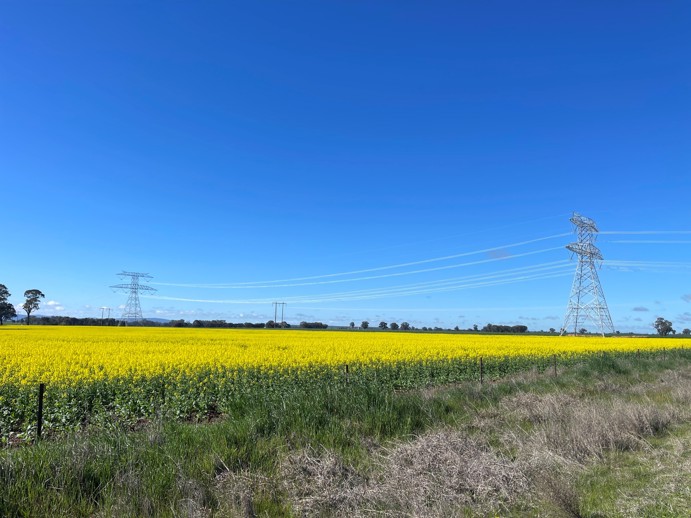
In line with the regulatory guidelines, initial cost estimates are primarily based on the lowest-cost options to minimise financial impacts to consumers. The overhead line design is typically lower cost than undergrounding, as it is significantly more technically complex, costing up to seven times more per kilometre than an overhead design. However, Transgrid acknowledges strong community interest in undergrounding, and as such we have considered the potential for partial undergrounding in the PADR assessment.
If a new transmission line was required, how would a route be developed?
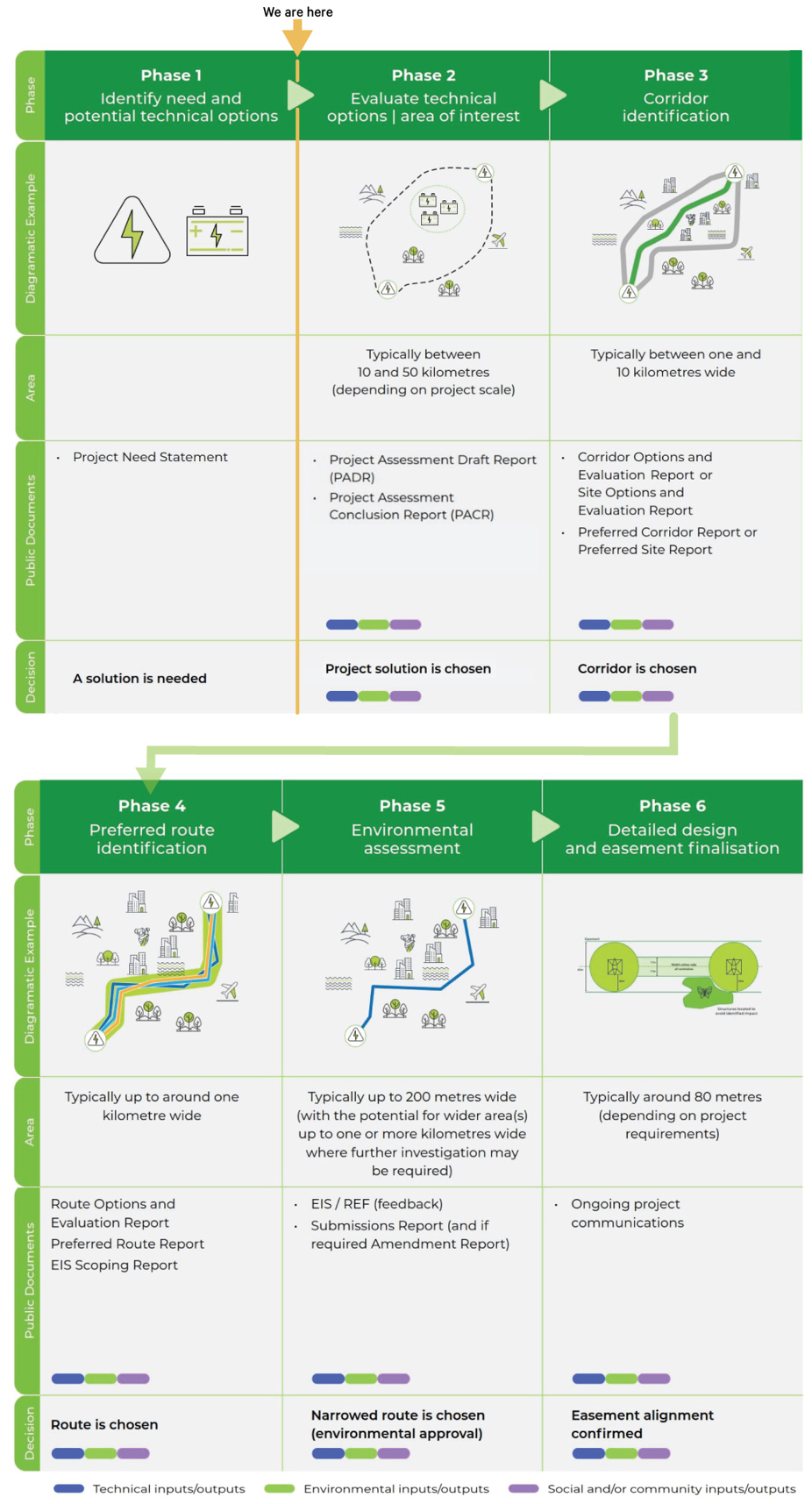
A formal route development process will only begin if the preferred option of the PACR includes the new connection between Bannaby and South Western Sydney. The completion of the PACR is not expected before mid-2027.
Should this occur, Transgrid would follow its comprehensive and highly consultative route development guideline to assess potential corridors and routes over a period of many months. The process would involve extensive community and stakeholder engagement and balance engineering, social, heritage, and environmental constraints and costs. A snapshot of the process is below.
Who are we talking to?
We will be conducting broad and inclusive engagement with our stakeholders over an extended period. This includes webinars and briefings for consumers, community groups, consumer advocates, First Nations representatives, industry, local councils and MPs.
Consumer focus groups and stakeholder reference groups are being established to ensure local priorities and perspectives are reflected in the ongoing development and assessment of options. As the project progresses through this planning stage, we will continue to keep you updated with publicly accessible information across multiple channels.
Our Stakeholder Engagement Plan for Sydney Ring South PADR, including all the stakeholders we plan to speak to, can be found here.
How are submissions used to assist the planning process?
Stakeholder submissions are a formal part of the regulatory decision-making process. We will consider all feedback and demonstrate how input shaped the analysis and outcomes of the project. Feedback will be assessed alongside technical and economic analysis and directly influence the option selected, the timing of any future investment, any future design, site or route considerations.
Where can I find more information?
Please email us at srs@transgrid.com.au or call us toll-free on 1800 222 537.
 For an interpreter, call 131 450 and ask the services to call Transgrid on 1800 222 537. The interpreter will help with translation.