 TIS 131 450
Australia’s largest transmission project has perpetually preserved an area of land eight times the size of the City of Sydney LGA, protecting valuable biodiversity and threatened species of flora and fauna across regional NSW.

EnergyConnect
Clean energy connection secures generational protections
21 September 2026
Transgrid has executed Biodiversity Stewardship Agreements (BSAs) on seven private properties – totalling 23,000ha – along the 700km EnergyConnect project alignment from Wagga Wagga to the South Australian border. A BSA permanently protects land and delivers site actions to improve ecosystems and threatened species habitat.
The portfolio, across the Riverina and Murray regions, includes one of the largest BSAs in the state at Singorimbah – an 8,310ha property protecting valuable habitat for one of Australia’s most endangered birds.
The conservation agreements will protect some of the country’s most vulnerable species of flora and fauna including the Plains-wanderer, Squirrel Glider, Southern Bell Frog, and Dessert Hopbush.
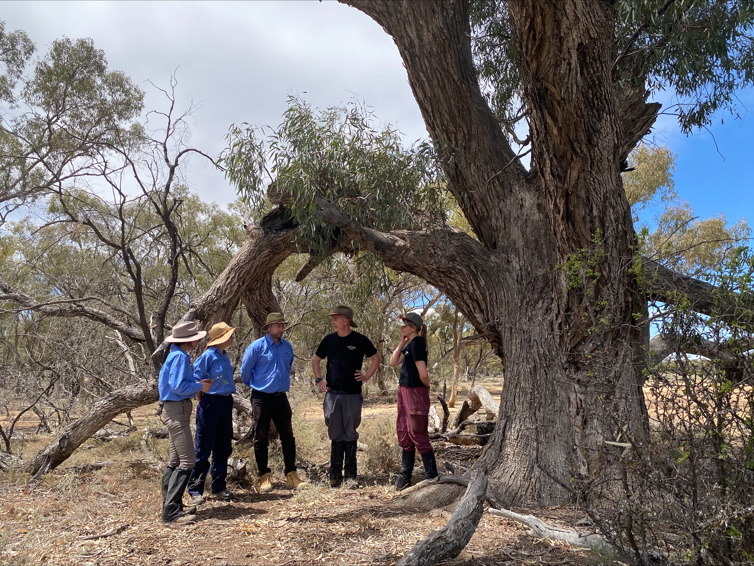
“These are important steps in protecting valuable biodiversity and threatened species of flora and fauna for future generations,” Transgrid’s Executive General Manager of Environment Maryanne Graham said.
“We need to balance the delivery of new energy infrastructure - for all consumers - with the need to protect communities and biodiversity. We try to avoid sensitive areas, but when that is not possible, we have to find alternatives.
“In this instance we have offset residual impacts by establishing a comprehensive portfolio of Biodiversity Stewardship Agreement (BSA) sites. Working closely with landholders, ecologists, botanists, and traditional custodians, we identified and studied properties with high biodiversity values to provide like-for-like large offsets and developed comprehensive management plans to preserve important habitat in perpetuity.
“These BSAs are in addition to a range of sustainability measures implemented in the delivery of EnergyConnect, including finding ways to reduce vegetation clearing by 45 per cent, preserving over 1,000ha of habitat, and installing 6,400 nest boxes for hollow-dependent species.”
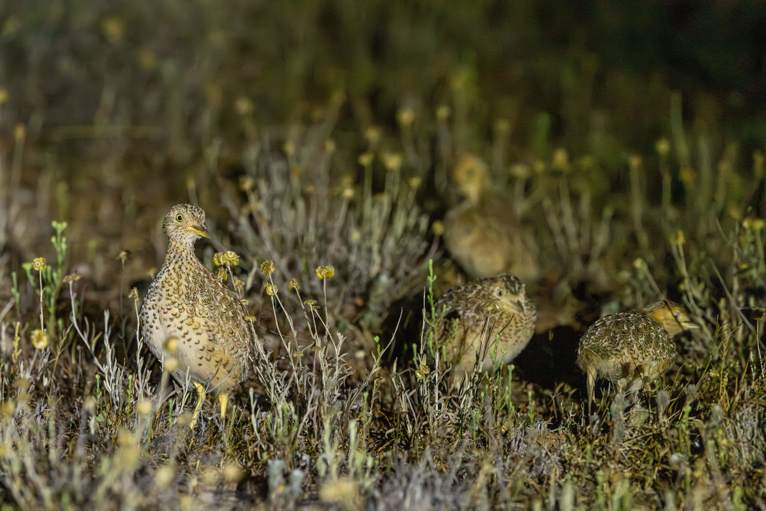
The Singorimbah BSA in the Murrumbidgee Shire will ensure the protection of threatened species of flora and fauna including the critically endangered Plains-wanderer bird, as well as shrublands, grasslands, wetlands and the threatened ecological community of Myall Woodland.
Surveys have found 11 Plains-wanderers on site including four chicks, confirming the early success of conservation measures. This property directly adjoins Oolambeyan National Park and represents a significant improvement to the total reserved conservation values in the Riverina and across the Hay Plains.
A BSA on a 6,597ha property called Big Bend in the Wentworth Shire near the NSW-Victoria border will result in the protection of four threatened species of flora including the largest known population of the critically endangered Desert Hopbush.
Another five properties – totalling about 8,000ha – are also part of EnergyConnect’s BSA portfolio, protecting threatened species including the Superb Parrot, Southern Bell Frog, Squirrel Glider and Club Spear-grass.
As part of its BSAs for EnergyConnect, Transgrid is fully funding site actions to increase biodiversity including the management of native vegetation, threatened species habitat, weeds, human disturbance and pest animals.
Scout Ecology Director and Botanist Martin Sullivan, who carried out extensive surveys to identify five Transgrid BSA sites, said they are equivalent in many ways to a national park with strict rules and management actions to improve the condition of the properties over time.
“These stewardship agreements that we have been working on with Transgrid are really important to help manage the impacts on biodiversity across renewable energy projects in NSW,” Mr Sullivan said.
“Scout Ecology has been working with Transgrid on about 8,000ha across these five properties which is much larger than the total area of impact.
“There are a lot of threatened flora and fauna species that we have been able to protect on these BSAs.
“We know we have been able to conserve some of the best quality examples of vegetation and threatened communities. These will now be looked after in perpetuity, which is a good outcome.”
EnergyConnect Biodiversity Stewardship Agreements
|
Property |
Town |
LGA |
Ha protected |
Threatened species/ecological communities |
|
Singorimbah |
Carrathool |
Murrumbidgee Shire |
8,310 |
Threatened species: Plains-wanderer, Mossgiel Daisy, Chariot Wheels, Winged Peppercress, Slender Darling Pea Threatened ecological communities: Myall Woodland |
|
Big Bend |
Rufus |
Wentworth Shire |
6,597 |
Threatened species: Harrow Wattle, Bluebush Daisy, Desert Hopbush (largest known population), Bitter Quandong Threatened ecological communities: Sandhill Pine Woodland |
|
Nulla Nulla |
Pine Camp |
Wentworth Shire |
3,382 |
Threatened species: Club Spear-grass (largest known population) Threatened ecological communities: Sandhill Pine Woodland |
|
The Overflow |
Morundah |
Federation |
1,343 |
Threatened species: Slender Darling Pea, Silky Swainson-pea, Winged Peppercress Threatened ecological communities: Natural Grasslands, Box-Gum Grassy Woodland, Myall Woodland, Sandhill Pine Woodland |
|
Ardmore |
Gundagai |
Cootamundra-Gundagai |
1,282 |
Threatened species: Squirrel Glider, Yass Daisy (largest known population) Threatened ecological communities: Box-Gum Grassy Woodland |
|
Parkview |
Booroorban |
Edward River |
1,135 |
Threatened species: Southern Bell Frog, A burr-daisy, Winged Peppercress, Chariot Wheels, Slender Darling Pea, Silky Swainson-pea Threatened ecological communities: Sandhill Pine Woodland (best known example) |
|
Wood Park |
Jerilderie |
Murrumbidgee Shire |
765 |
Threatened species: Superb Parrot Threatened ecological communities: Myall Woodland |
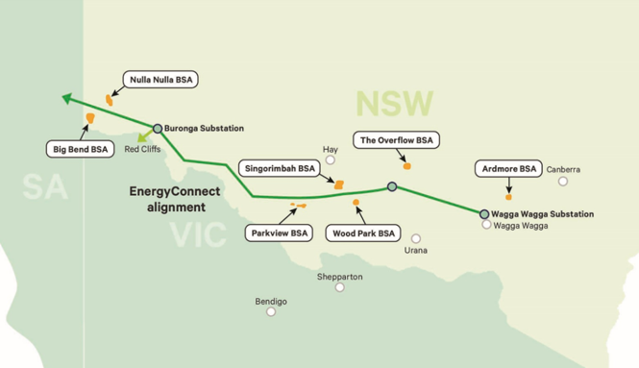
EnergyConnect Biodiversity Stewardship Agreement sites
Media enquiries: Mark Nolan – 0429 047 136